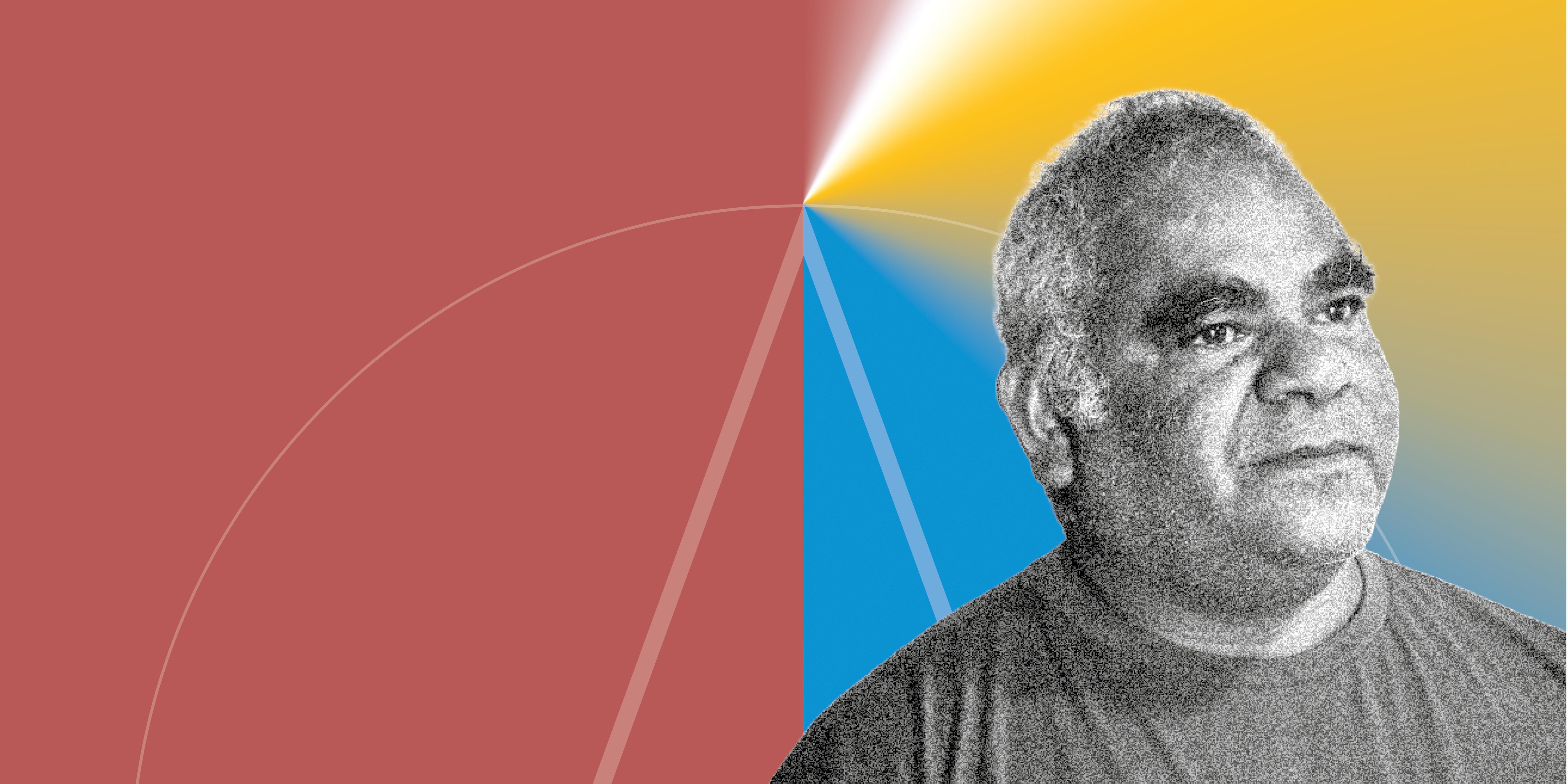
Paul Bong (Bindur-Bullin)
Cairns/Gimuy

I’m named after a young warrior and I think that’s probably why I’m drawn to representing the shields of our rainforest people.
Paul Bong (aka Bindur-Bullin), is a descendant of the Yidinji tribe who occupied the fertile rainforest lands from Cairns in the north to Babinda in the south and west into the Atherton Tablelands as far as Kairi. His ancestral history is rooted in this region. Bong’s great-grandparents were both tribal elders, when all the lands were Yidinji. His father, George, also knew the traditional ways of living. He spoke the Yidinji language (Yidiny), though he wasn’t allowed to speak it when he went to school. George was forced to reject the traditional ways and to assimilate into white society. This broke the continuity of Bong’s culture, language and heritage from being passed down through the generations.
Bong grew up around the Yattee area near Wright Creek in Far North Queensland. He is driven to regain the stories and culture that was lost to European settlement and to share what was lost through his work. His grandmother, who spoke Yidiny, taught Bong stories and legends about the rainforest – its bush food, animals, young warriors and special places such as Babinda Boulders and the Gordonvale Pyramid. These stories are the inspiration for many of his works. Bong incorporates traditional designs with modern techniques with each design having its own spiritual meaning.
Paul Bong (Bindur-Bullin) is a Yidinji Man whose family is from the Mulgrave River region south of Cairns.
“I’m named after a young warrior and I think that’s probably why I’m drawn to representing the shields of our rainforest people.
I learnt about our culture and traditional ways from my Great Grandmother. Both my grandparents were great tribal leaders.
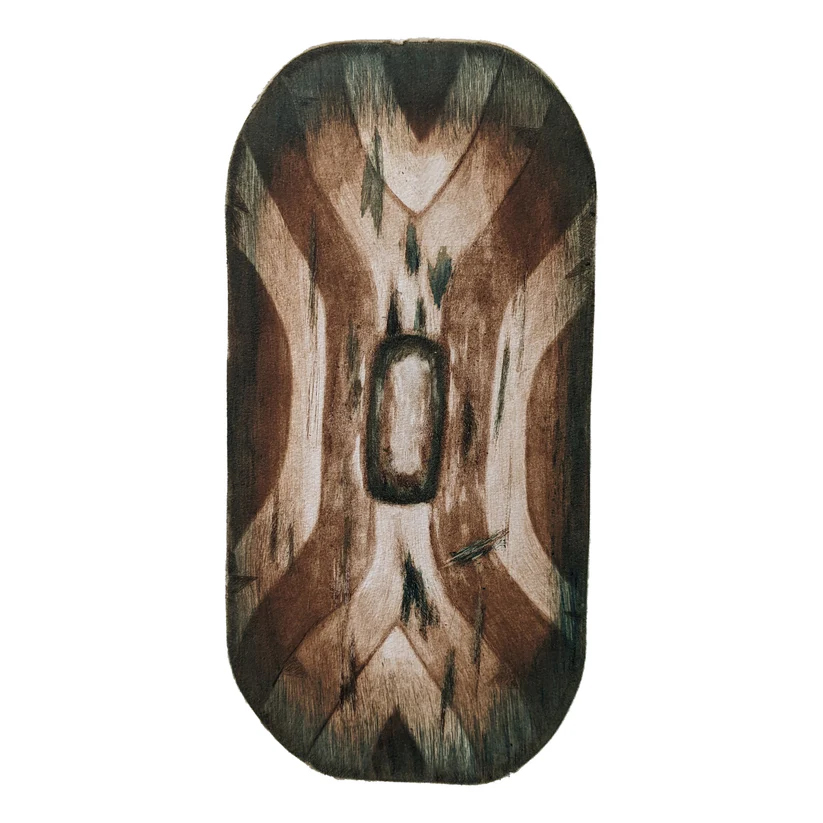
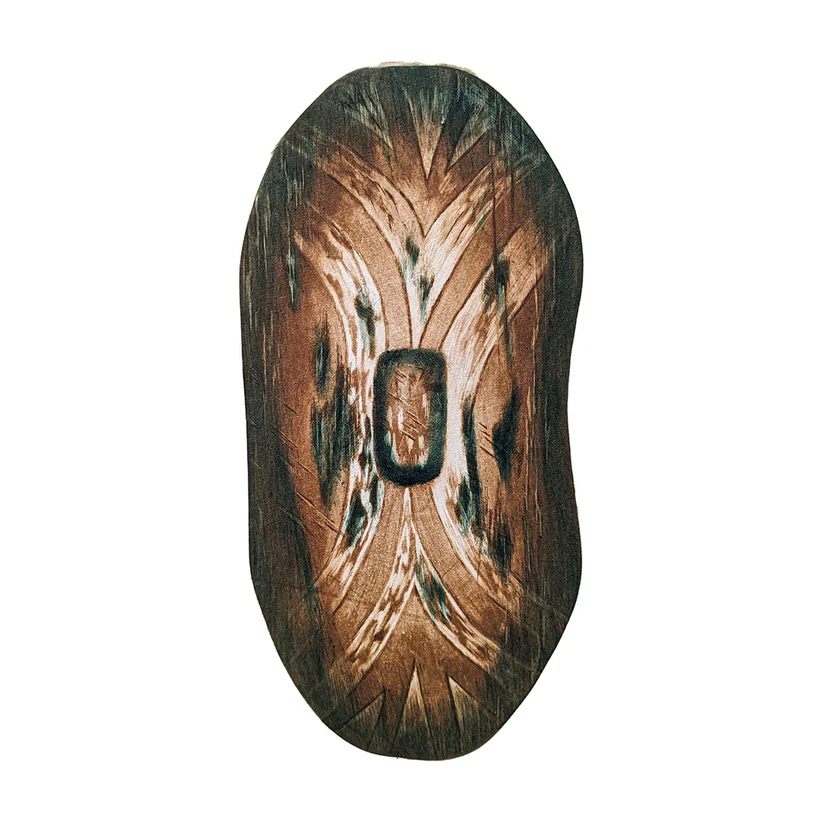
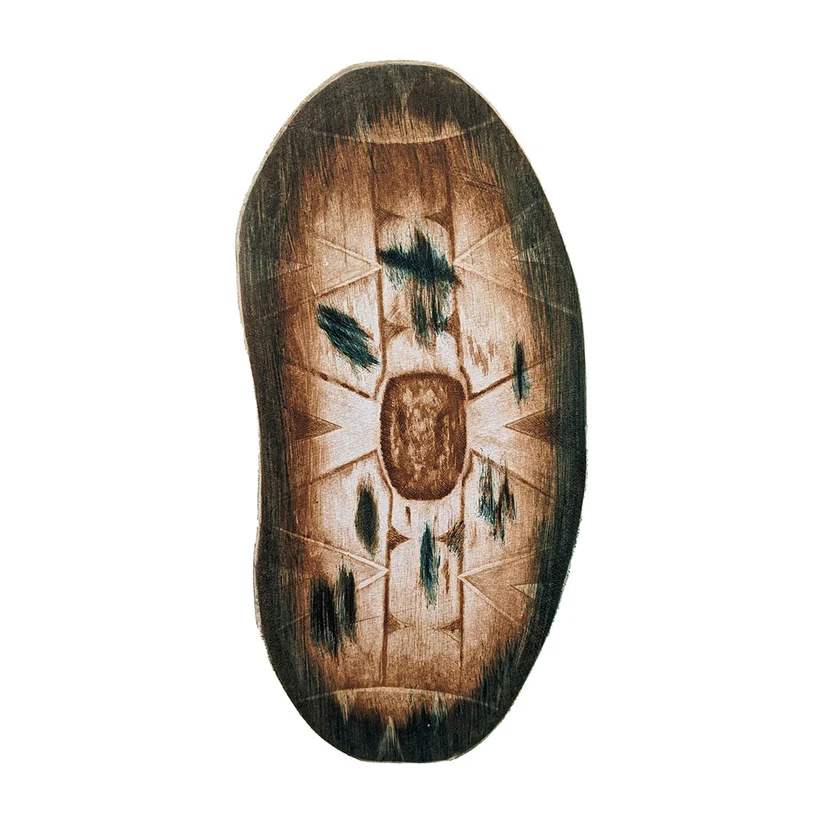
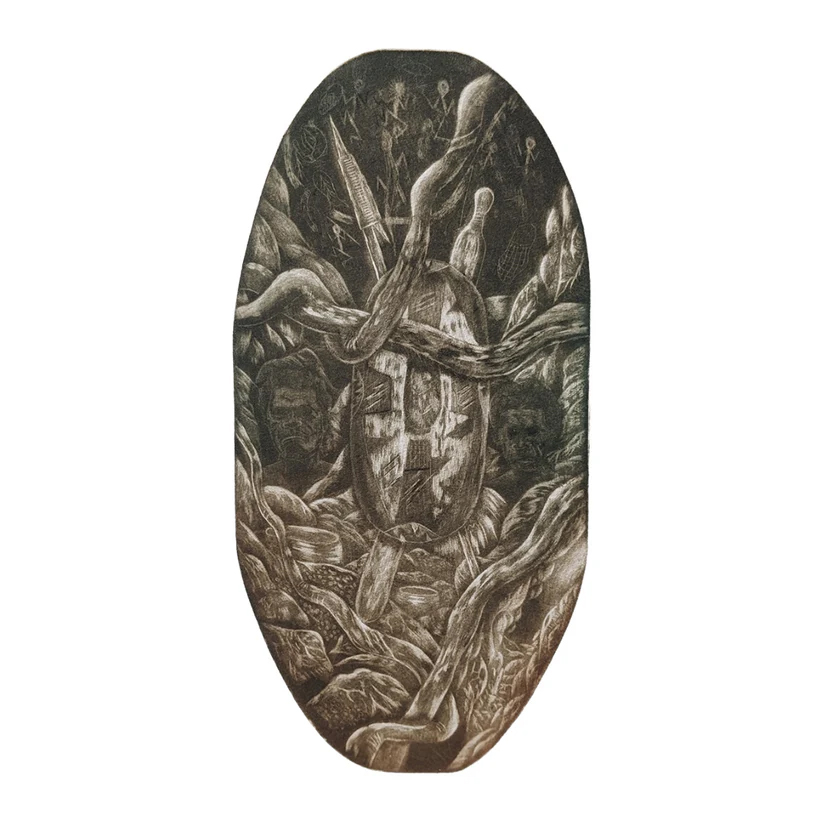
When a young man was to be initiated, he’d get a blank timber shield, carved from the buttress of a fig tree and he’d paint his totem on it. That shield became one of his most important possessions and the design would identify him.
He’d always put the stings of the scorpion in there to remind him of the pain and agony of his initiation into a man.”
Paul Bong’s carved and painted rainforest shields can be seen at Brisbane’s International Airport, he has ‘Yidinji Designs’ on Glass for Air New Zealand in Los Angeles and his work has been exhibited throughout Australia, Germany and the United States.
More recently his work was selected for the National Museum of Australia’s major exhibition Encounters alongside 151 Aboriginal and Torres Strait Islander artefacts in the British Museum collection.
He is now the first Yidinji artist to be working with glass.
Related…
More news, events and exhibitions

Shop
Works from the artist
Members receive 10% off the value of all artworks and items in store. Add a membership to your cart today to gather benefits.
Past Event: The Ghosts of Lani Mulgrave Blair // Opening Event